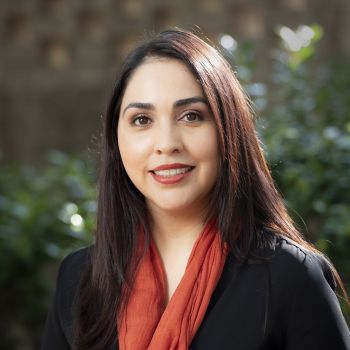
For preachers like Rev. Christopher Smith, senior pastor at Jordan Memorial UMC in Ramseur, N.C. and La Luz De Cristo UMC in Asheboro, N.C., preaching can sometimes feel like a lonely endeavor. “It is easy to get stuck in patterns and to get comfortable when you don’t have honest feedback,” he said.
Rev. Karen Mann, pastor of Sojourners United Church of Christ in Charlottesville, Va., found similar challenges when preaching a series in her church on faith and climate change, an often charged topic. “I felt quite alone in addressing that topic and had few resources to structure it,” she said. “I also found myself falling into despair about the realities of climate change.”
Now nearly three years into the Transformative Preaching Lab, an initiative funded by Lilly Endowment Inc. to prepare creative, culturally competent preachers who can reach audiences in effective and engaging ways, Duke Divinity School has brought preachers including Smith and Mann together in peer-learning cohorts focused on helping them address challenging issues from the pulpit—including collective trauma, creation care, and intergenerational and bilingual ministry.
Each cohort of 12 to 16 people is guided by a faculty facilitator and meets for four to six online sessions and an in-person weekend retreat at Duke Divinity School.
Alma Tinoco Ruiz, the principal investigator for the grant and the Royce and Jane Reynolds Assistant Professor of the Practice of Homiletics and Evangelism, has said she’s learned the importance of building community at every step so that the program is more than just instructors teaching participants—it’s a collaboration where participants learn from each other and their on-the-ground experiences in ministry.
“It’s been an interesting experience in terms of discerning what is the best format of the cohorts and listening to the facilitators,” she said. The first cohort began with a two-day retreat, and then participants preached during later online sessions and received feedback from their peers.
But after hearing that the retreat would be more useful as an opportunity to preach in person, Tinoco Ruiz switched the format to begin with online sessions that focus on building community and culminated with the in-person retreat, where cohort members would now be prepared to engage more deeply in compelling and transformative preaching in an atmosphere of trust.
“The in-person retreat was wonderful,” said Smith. “It was great to form connections with other pastors, and to learn from each other. The preaching in person was helpful; it allowed for real-time feedback and the ability to preach in a live setting.”
“I think that preaching is better done in community. We don’t have to do this alone, especially during these times. Many pastors are in a vulnerable situation, so that they have to be careful about what they say. I believe that the Holy Spirit can talk to us directly and also through people in our community who are also seeking the guidance of the Holy Spirit. We should feel like we can talk with someone we trust, with another pastor, another Christian, about the message God has given us and the process of discernment about how to communicate that message better in a way that people can receive it, and maybe then you might get to their hearts.”
“With the in-person retreat, it’s like a preaching festival,” said Tinoco Ruiz. “It gives you something to work on that actually names areas in which you are doing great and areas of improvement. And most of them say, ‘You know, I never received feedback from my church members—not in the way of helping me grow as a preacher.’
"And so that’s something that this experience helps them with. And there’s a sense of community—a feeling that they are safe, that it’s okay to make mistakes. I ask them to offer their sermon as an offering for the whole group. There’s no one who preaches a perfect sermon. Make it an opportunity for learning and growing as a preacher, because we are learning from your sermon.”
The cohorts include participants from around the U.S. including Puerto Rico, and a number of denominations, including Methodist, Presbyterian, Baptist, Mennonite, Episcopal, Anglican, United Church of Christ, and non-denominational Christians. Facilitators and other instructors have included faculty from Duke and beyond, as well as leaders in theological education and ministry.
Many of the cohorts deal with sensitive topics, such as preaching in communities that have experienced trauma or continue to be exposed to traumatic stress. The community that is built over the months online helps pastors go beyond the training they receive from the instructor and learn from others who are dealing with similar issues.
“We talk about ways in which a pastor can address an issue that they know will make the congregation uncomfortable in a way that they are able to receive it,” Tinoco Ruiz said. “And so, having a group of pastors who come from different contexts, different experiences in ministry and Christian backgrounds, and who have experience with different situations in their communities brings a lot of wisdom. For instance, in the cohort about trauma-informed preaching, we talked about the ways we can address the collective trauma our communities have experienced in a way that is not harmful. One pastor suggested that if we know our sermon will address trauma, we could designate a special Sunday and have trained individuals available afterward to talk with congregants.”
For Mann, who participated in the creation care cohort, the experience helped give her resources to address the topic in the future. “The cohort experience helped me feel less alone in addressing climate change from the pulpit and gave me language to talk about both despair and hope as it relates to climate. I have never shied away from addressing challenging topics, but I do think the cohort experience boosted my confidence in this area.”
“It was good to hear from folks from congregations that are very different from mine, because the way they address climate change, the way they preach, and the way they approach their congregation is necessarily different. It helped me to have a wider view of what it means to faithfully preach about climate and faith.”
Cohort facilitators focus intentionally on cultivating a sense of shared community during online sessions, which has helped participants who come from many different denominations and traditions approach each other with respect and a commitment to mutual support.
“It was good to hear from folks from congregations that are very different from mine, because the way they address climate change, the way they preach, and the way they approach their congregation is necessarily different,” said Mann. “It helped me to have a wider view of what it means to faithfully preach about climate and faith.”
Said Tinoco Ruiz, “I think it has been amazing that participants come with this spirit of learning and listening, because we have diversity, Some pastors come from churches that are affirming and preach about LBGTQ+ issues, and we have in the room pastors who are not affirming. But they have been very respectful. And I think it’s because in the spirit of how it is done: no one is trying to convert anyone into believing anything. It’s just, ‘This is my context, this is my congregation.’ Together, cohort members share ideas about how to address difficult issues in a way that congregations might be willing to listen and open their hearts.”
Grant Builds Preaching Resources for Duke Divinity Students
In addition to Duke Divinity School students who have participated in the cohort learning groups, students have benefited from the Transformative Preaching Lab grant in several ways.
With more funding for additional hybrid online preaching courses, the Certificate in Preaching was made available to hybrid students in fall 2023. The school’s preaching labs have also been upgraded with new technology to support hundreds of students who use them not only for classes, but for applications, awards, and ordination requirements.
The grant also supports the growth of worship at the school, including more opportunities for ecumenical and intercultural worship experiences and collaborations.