Published May 6, 2026

From first-generation scholars and international students to second-career ministers and hybrid learners balancing full-time work, our graduates share how they were shaped for ministry in its many forms through their backgrounds, communities, coursework, and experiences.

Here are snapshots of some of our graduates in the Class of 2026. 
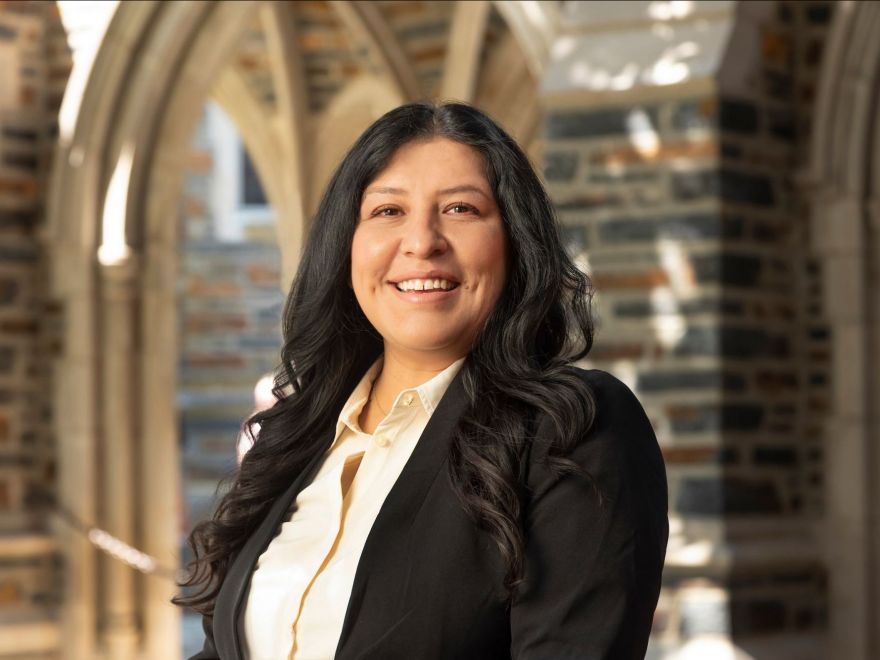
Cristal Ocampo Ruiz in blazer

Cristal Ocampo Ruiz, MDiv 2026

Ocampo Ruiz is chaplain to the Hispanic House's La Union Latina leadership group and a campus ministry specialist with the Cooperative Baptist Fellowship. She also has earned certificates in Latinx Studies, Baptist Studies, Preaching, and Nonprofit Management.

What is most important for someone to understand about your background?

As a first-generation Latina graduate, my educational journey represents more than personal achievement; it reflects the sacrifice, the resilience, hopes and dreams turned into reality, not just for me, but also for my community and my family. I learned to navigate complex systems like seeking financial aid, professional opportunities, and creating connection networks without a roadmap. My background has shaped a strong sense of responsibility to uplift my community and create opportunity for those who follow. It also gives me a perspective that bridges cultures and helps me understand challenges that many underserved communities face.

What makes you most excited about ministry or your future vocation?

What makes me most excited about ministry is that there is hope. I want to leave this world better than I found it, and we are living in tough times, which make people feel hopeless and fearful. So many people are wrestling with what it means to have faith in the midst of turmoil and chaos. I am passionate about young adult ministry. Working in campus ministry has allowed me to see that there is interest and desire to learn about God and wrestle with those theological questions that make us uncomfortable.

Where was your favorite field education placement?

My favorite field education placement was at El Refugio, an organization that improves the quality of life for all in Sanford and Lee County, N.C. by building bridges between transitioning immigrants and established residents through sharing, learning, and serving our community together while respecting cultural identities.​ I learned that offering a helping hand or lending an ear is so valuable in people's lives, and it is the closest way to experiencing God's love in a tangible way. There is so much work to do, and oftentimes, so few hands.

Tell us about your favorite Duke Divinity professor.

It is so hard to pick a professor because there are so many great professors at Duke Divinity School. One professor who always comes to mind is Dr. Jung Choi. She exemplifies love for teaching, humility, and embodies women empowerment. She is always ready to listen and provide support in whatever way is needed.

What do you most love about campus?

I love being in La Casa at the Divinity School. It is a warm, comfortable, and welcoming place to study, catch up with friends, and enjoy a snack. I also love the Duke University Chapel. Its majesty creates a space where I can unwind, center myself, and find solace when I am stressed or trying to meet deadlines. Last, but certainly not least, I love the Duke Gardens. Being surrounded by beautiful creation at the gardens reminds me that there are seasons for everything. Just as the plants are cared for and tended, so are we, God's children.

What does success look like to you after Duke? 

Success after Duke is living a happy and fulfilled life. To me, helping others thrive and supporting them in their spiritual and faith journeys is already being very successful! After graduation, I plan to continue in campus ministry. I also want to pursue ordination and continue to do community outreach and social justice advocacy.

Image

What makes me most excited about ministry is that there is hope. I want to leave this world better than I found it, and we are living in tough times, which make people feel hopeless and fearful. So many people are wrestling with what it means to have faith in the midst of turmoil and chaos."

Emily Magen near Duke Chapel

Emily Magen, MDiv/MPP 2026

Magen was awarded the Jameson Jones Preaching Award. She is also a dual degree student, graduating with both a Master of Divinity and a Master of Public Policy. She has been active in the gospel choir at the Divinity School and has served two years in Duke's Graduate and Professional Student Government. She has also earned two certificates: Prison Studies and Faith-Based Organizing, Advocacy, and Social Transformation.

What is most important for someone to understand about your background?

I'm a proud first-generation college graduate, and I also grew up in a denomination where women were not permitted to teach, preach, or lead in many capacities. My very presence here—not only in a graduate program, but a divinity school at that—is a gift and the work of the Holy Spirit. I don't take a moment of this experience for granted.

What led you to Duke Divinity?

Honestly, I can only credit the quiet nudges of the Holy Spirit over many years. During the pandemic, I was a high school teacher interested in education policy. As I watched policy decisions ripple across my community with uneven impacts, I felt even more strongly about the need for a person-first policy approach that honors all people's dignity while attending specifically to those on the margins. One thing led to another, and when a mentor told me about Duke's dual MDiv/MPP program, it just clicked. The combination has allowed me to strengthen my analytical skillset and work in economic development while growing my own faith and rooting myself more deeply in my "why" behind the work.

What makes you most excited about ministry or your future vocation?

Prison ministry is something I had not encountered before Duke Divinity, but that I think every church should be aware of and involved with in some capacity. We worship a risen Lord who, though innocent, was arrested, tried, and executed by the state. Much of the New Testament was written from a prison cell, and early Christians developed support networks to aid their siblings who were incarcerated. At Duke, I have been most formed by people who spend time in prisons, whether voluntarily or not, and it is in those conversations that God's work of reconciliation and healing feel most palpable to me. Whatever my future vocation may hold, I know it will be informed by these experiences.

Have any courses at Duke been particularly impactful for you?

The core classes—Church History with Warren Smith, Old Testament with Brent Strawn, and New Testament with Ross Wagner—really rocked my world. Some people came into Divinity School with undergraduate degrees in theology, but I was not one of them. These first core classes were hard for me, because they blew open my understanding and gave me bigger, deeper questions to wrestle with. I'm really thankful for a strong foundation to build on that helped me to engage with all my other classes going forward.

What qualities do you most appreciate in your peers at Duke? 

I've met people here who are so thoughtful and committed to serving their local communities. I've most appreciated the folks who have challenged me to ask different questions or consider different perspectives than my defaults. And I've greatly benefited from the collaborative spirit—I would not have gotten through those core classes without my beloved Study Buddies group. Ministry is collaborative, so being able to share resources and help each other has been vital to my time here.

What does success look like to you after Duke? 

Success, to me, looks like taking what I've learned from this degree and sharing it with everyone I meet. This doesn't have to mean explaining different church doctrines or first-century heresies (although you'd be surprised how many times I've been asked, even in a non-church context). For me, the Good News is that because of Christ, there is a different way we can live our lives in relation to God and to one another. This is something we are all invited to participate in, regardless of whether there is "Reverend" in front of your name. As someone who will be a layperson, I still consider myself as being called to a ministry: to accept God's invitation and extend abundant hospitality, grace, and love to everyone, but especially to those we'd least expect.

What are your plans for after graduation?

I'll be an analyst with HR&A Advisors. Their mission is to increase opportunity and improve people's lives in cities, contributing to more equitable, resilient, and dynamic communities. I'll be working on their Real Estate team, where they do both strategic planning and implementation—essentially advising clients as they approach housing development, transit systems, parks, etc. 

Jay Locklear outside Westbrook

Jay Locklear, MDiv (Hybrid) 2026

Locklear was awarded the Hoyt Hickman Award for Excellence in Liturgics. McClellan has also earned the Certificate in Worship, Certificate in Nonprofit Management, and Certificate in Theology and the Arts. He has served as worship leader for chapel services and as student member of the Curriculum Committee.

What is most important for someone to understand about your background?

I grew up in the church. I learned to play the piano from church pianists and grew up playing the piano in church. It shaped and formed my faith, as well as instilling in me a desire to serve the church. Music has been such an important part of my journey, as well as creating innumerable opportunities over the years. I am grateful for the people who invested in me, grateful that experience is part of my journey, and grateful that music has been a significant part of my journey at Duke Divinity School.

What led you to Duke Divinity?

I came to Duke Divinity School because I wanted a theological education that would allow me to integrate all of the different parts and paths of my life, along with my church experience and background. I also knew that Duke Divinity School would be a place where I would be drawn into a community of people, some on similar journeys, as well as some whose journeys look nothing like mine.

What makes you most excited about ministry or your future vocation?

I'm excited about the chance that I get to preach and to teach in a variety of contexts. I preach and lead worship in the local church I serve every week, and every week is a new opportunity to walk alongside a group of people who are excited about growing and serving as disciples. I'm equally excited about opportunities to teach, both inside and outside my local church context. Recently, I've had the opportunity to serve as a TA for Course of Study classes. I'm hopeful that in the future, I will have the chance to teach more, hopefully at the seminary/university level.

How did the hybrid MDiv program enable you to pursue a degree at Duke Divinity?

The hybrid modality is exactly what I needed in order to be able to pursue a Master of Divinity degree. When it was announced, I immediately applied and was thrilled when I was accepted. I was able to continue working a full-time job while attending school.

Tell us about your experience with residential intensives on campus.

The best part about the residential intensives is the chance to be physically present and gathered together with people that you spend time with on Zoom otherwise. Bonds are formed and friendships are strengthened every time we gather. It makes a difference to be with people, to worship with people, to be in conversation around the table with people.

Tell us about the cohort learning experience.

The cohort learning experience is crucial to the hybrid modality. Between spiritual formation groups, our small groups in various classes, and other groups, we were given the opportunity to connect with classmates in particular ways. Outside of class, we took advantage of group messaging to stay in contact with one another, in addition to various channels offered by the school.

What does success look like to you after Duke?

Being able to continue learning, but with a greatly expanded skillset with which to learn. Also, having a wider and deeper community with which to continue the journey in ministry. I plan to continue serving as a local pastor in the United Methodist Church, while pursuing opportunities to teach in the local church and beyond.

Youngjun Lee, MTS 2026 outside Duke Chapel

Youngjun Lee, MTS 2026

Lee has been active in the Asian House of Studies and Asian Theology Group.

What is most important for someone to understand about your background?

I am from Seoul, South Korea. I come from a Baptist church background and completed my undergraduate studies at Korea Baptist Theological University in Korea.

What led you to Duke Divinity?

My mentor recommended Duke Divinity School because of its academic excellence. As I researched the school, I became especially interested in its strong tradition in New Testament studies. Duke’s academic legacy and rigorous methodological approaches drew me to pursue my studies here.

What makes you most excited about ministry or your future vocation? 

I am excited to serve the church in South Korea. Through my studies, I hope to share what I have learned at Duke Divinity School with churches and theological communities. In the future, I would like to contribute to theological education and help equip future ministers in theological institutions.

Have any courses at Duke been particularly impactful for you?

Dr. Kavin Rowe’s Luke Exegesis course was particularly impactful for me. Before each class, we read the Gospel of Luke in several ways, such as reading from the beginning to the end, reading from a specific section to the end, or reading passages backward. These practices helped me think more deeply about the text and notice perspectives I had not seen before. In this class, I worked closely with the Greek text, which pushed me to think carefully about details in the Gospel. He often asked probing questions that made me reconsider assumptions and develop theological imagination. Through his teaching, my understanding of the New Testament deepened.

What do you most love about campus?

Duke Chapel is the place I love most on campus. It is not only beautiful, but it also gives me a sense of peace. When I spend time there, I often reflect on the purpose of my theological education and my calling. It helps me reorient my studies toward serving others, society, and the church, which resonates with Duke’s motto, Eruditio et Religio.

What do you most love about Durham? 

I love The Parlour ice cream shop in downtown Durham and Cocoa Cinnamon, especially the one that serves churros. Sometimes my wife and I go there when we need a break and want to spend some time together. I also appreciate Durham’s diversity. I enjoy meeting people from different backgrounds and listening to their stories.

What qualities do you most appreciate in your peers at Duke Divinity? 

I appreciate the openness and thoughtfulness of my peers at Duke Divinity School. Students come from many different backgrounds and traditions, which often leads to meaningful conversations. I value how willing they are to listen, learn from one another, and engage deeply with theological questions.

What does success look like to you after Duke? 

In the near term, success for me would be pursuing doctoral studies in New Testament. In the long term, my goal is to return to South Korea and contribute to the church and theological education. If my work can help equip future ministers, I would consider that success. After graduation, I plan to pursue doctoral studies in New Testament in Germany. My time at Duke Divinity School has prepared me well for this next step. I hope to continue developing my research in the field.

Carolyn Branch, MDiv 2026 outside Duke Chapel

Carolyn Branch, MDiv 2026

Branch has earned the Certificate in Theology & the Arts and the Certificate in Anglican Studies. She has been active in the Anglican Episcopal House of Studies and New Creation Arts.

What is most important for someone to understand about your background?

I studied theatre at Lee University before coming to Duke Divinity School. My home church is now Christ Our Life Anglican in Raleigh, where I work and am pursuing ordination.

What led you to Duke Divinity?

I came to Duke Divinity seeking a grad school experience that would cultivate holistic growth for me–as a student, as an artist, and a follower of Christ. I was drawn to Duke's Initiatives in Theology & the Arts and excited about the interdisciplinary prospects of studying at a seminary within a larger Research 1 institution. But what ultimately brought me to Duke Divinity School was the authentic and ecumenical joy for the gospel that I saw within the community. 

Where was your favorite field education placement?

I deeply enjoyed getting to serve my home parish, Christ Our Life Anglican, through field education. This experience allowed me to practice parish ministry and receive focused mentorship within a space where I have long-term investment. I was able to launch a Writer's Guild within our church and host prayer writing workshops, a project that combined leadership training with an area of personal passion.

Tell us about your favorite Duke Divinity School professor.

I am particularly grateful for the leadership example that Fr. Timothy Kimbrough is to me and to so many students within the Anglican Episcopal House of Studies. I cannot overstate the care and energy with which he leads the house. He takes every opportunity to increase our competency in and knowledge of our tradition while also remaining attentive to our personal lives and spiritual growth. He travels to our local parishes to hear us preach or be ordained, he is always glad to offer counsel or write letters of recommendation, and he teaches with both a knowledge and love of Christian liturgy.

What do you most love about campus?

The Gothic Reading Room in Rubenstein Library is my second home where I spend hours each week. It is a true gift of the Duke Divinity experience to study, pray, and reflect in beautiful spaces, and I am so grateful to sit in the quiet grandeur while reading and writing. I also love the opportunity to meet with someone by going for a walk in the Duke Gardens; many a good conversation has happened wandering those paths.

What qualities do you most appreciate in your peers at Duke? 

Duke Divinity is at its best when it is at its most diverse and most charitable. I have appreciated the range of denominations and faith traditions, especially when that variety generates thoughtful and curious dialogue. I have particularly appreciated that within the Anglican Episcopal House of Studies, the work of navigating Christian peace, hospitality, and reconciliation is an active rhythm which guides our prayer and common life. We are far from perfect, but so much grace flows amidst tension.

What does success look like to you after Duke? 

One of my friends reflected on our time at Duke Divinity by asking whether we had grown in knowledge and love of God during our study. While I can answer this question with a yes, I hope that success afterwards is ultimately determined by that continued response. The future will hold a variety of quantifiable successes and failures, in my ministry, scholarship, and personal life. I will have succeeded if I can look back long-term and say, I have continued to grow in the knowledge and love of God and neighbor.

Do you have ministry/work plans for after graduation?

I will continue working at my home parish of Christ Our Life, where I will pursue ordination to the priesthood.

Jeremiah Gress, CTHC May 2026 outside westbrook

Jeremiah Gress, CTHC May 2026

Gress is an attending emergency medicine physician, per diem critical care hospitalist, and social emergency medicine fellow with Brown University Health in Providence, R.I. who has been part of the Theology, Medicine, and Culture (TMC) initiative.

What led you to Duke Divinity?

I wanted to study theology within the context of my daily work and under the direction of trustworthy and industrious genuine believers who could help deepen my faith, expand my mind, and aid in discerning what it looks like for me to serve God to the best of my abilities in the places he has led me to be. The TMC initiative has been exactly that, and I am fortunate to be a part of it now. It has blessed me far beyond what I had even imagined.

What makes you most excited about ministry or your future vocation?

I am passionate about seeing the love of God and the power of the Holy Spirit to bring healing, regeneration, and redemption ushered into the medical community and leadership spaces within my community locally.

Tell us about your experience with the hybrid modality.

I do not know that I would have felt ready to "abandon my post" in my community and at work if I had to move to Durham to do a fully residential program at Duke. The hybrid option has allowed me to remain present while also immersed in the theological study and community that I longed for.

Tell us about your experience with residential intensives on campus.

Intensive weeks at Duke Divinity are life-changing experiences. They are cognitively exhausting and filled with rigor but, to that same extent (if not more), they are filled with wonder, inspiration, and delight. I loved my time there and have little to complain about. It does help to prepare well so that one can be present and not working the whole time, but even if one is not prepared, immersing in the work as well as the community can be a welcome part of the journey. No notes.

Tell us about the cohort learning experience and how you connected with your peers both online and in person.

My cohort is an exemplary collection of brilliant and beautiful people. I love them. We connect over Zoom calls yes, but also text, phone calls, and prayer outside of the time we got to enjoy together in Durham.

What does success look like to you after Duke?

Being formed into a more genuine disciple of Jesus and knowing him more readily; more faithfully answering his call. Improving my writing, ability to articulate the Gospel, and demonstration of sound theological reasoning are also important. I will be continuing to work as a physician and ministry leader locally, but increasing my presence writing and teaching.

Tim Nicholson, MDiv (Hybrid) 2026 outside Duke Chapel

Tim Nicholson, MDiv (Hybrid) 2026

Nicholson is a Thriving Rural Communities Fellow and is active in the Methodist House of Studies. He has earned the Certificate in Methodist/Wesleyan Studies and the Certificate in Preaching.

What is most important for someone to understand about your background?

I am a second-career minister with 40 years of IT experience. I hold an associate’s degree in business computer programming, and I returned to school in 2000 to acquire a Bachelor of Science degree in computer information systems from North Carolina Wesleyan. In 2024, I became a licensed local pastor in the North Carolina conference of the United Methodist Church, and I am seeking ordination as an elder next year.

What led you to Duke Divinity?

I received my call to ministry in 2006 while on a mission trip to D’Iberville, Miss. I returned from that trip and informed my pastor, who arranged for a site visit to Duke. Unfortunately, I could not see how I could manage quitting my job and going to seminary full time, so I ran from the call and from God. Fifteen years later, I rededicated my life to God and found the calling never left me. I tried a purely online school but found it lacking in theological formation and academic rigor. After quitting that program, I discovered the Divinity School’s hybrid program and applied immediately. It has always been a dream of mine to earn a degree from a school as prestigious as Duke, and now, that dream is about to come true!

What makes you most excited about ministry or your future vocation?

A couple of months into my appointment last year, I realized I have a passion for rural church ministry. I grew up in rural northwest Georgia, so my heart is in rural communities and the people that live in them. Rural churches have been the backbone of the Methodist church in all its various forms since its inception. Unfortunately, COVID and disaffiliation have traumatized many rural churches in recent years, and many are struggling to survive. They need patience, a lot of work, and a lot of love to help them recover. It is to this work I feel God calling me.

Tell us about your experience with the hybrid modality.

When I first felt the call to ministry in 2006, I ran from it because I was afraid I couldn't afford to quit my job to attend school. The hybrid program at the Divinity School was God's way of removing that excuse. I could keep my regular job that paid my bills while still getting the same quality education as residential students.

Tell us about your experience with residential intensives on campus.

Immersion weeks quickly became extra holy weeks in the year for me and many of my classmates. We were able to disconnect (mostly) from our day-to-day lives and immerse ourselves in learning. We laughed, cried, prayed, studied, and worshipped together. These weeks gave us a residential experience and access to some of the greatest theological minds. Yet the most important aspect of these weeks is the strong relationships we built that will last a lifetime. As valuable as the education has been, the friendships I now have are more valuable. My cohort is amazing!

What was your favorite field education experience?

My favorite field education experience was at my home church, Village Church Rolesville, during my first placement. I focused on preaching that semester, and my pastor gave me several opportunities to preach. It affirmed my passion for preaching and helped me practice what I was learning in my classes.

Have any courses at Duke been particularly impactful for you? 

I cannot think of a single class that did not impact me in some way, but two classes were particularly impactful: Parish 777 and 778. The studies in Wesleyan history, theology, doctrine, and polity gave me a greater understanding of my faith and a deeper appreciation of my Methodist beliefs.

Tell us about your favorite Duke professor.

It will be hard to name just one. They have all been incredible, but if I had to name one, it would be Dr. Warren Smith. His passion for church history makes him such a great professor. He genuinely loves teaching, and it shows in how he interacts with students in class. One thing I lament about being a hybrid student is the lack of regular access to professors that residential students have. Most professors will arrange to meet with you one-on-one via Zoom. Dr. Smith offered to meet with a group of us in his Church History class one evening a week, allowing us to go deeper into characters and periods of history. It was a very special time for me getting to spend extra time with Dr. Smith and his amazing mind.

Do you have plans for after graduation?

I am a licensed local pastor of two small congregations that need a lot of time and attention, but between work and school, I have been unable to give them the time they need. After graduation, I plan to devote more time to being the pastor they deserve, and I look forward to the day when I can hang up my IT hat and don the ministry hat full-time.

Dairus Barnes, ThM 2026 outside Duke Chapel

Dairus Barnes, ThM 2026

What is most important for someone to understand about your background?

I am ordained in the Foursquare Church and serve vocationally as an army chaplain. I did my undergrad at Boise State (U.S. history), my MDiv at Fuller Theological Seminary, and my DMin at Baylor's Truett Seminary.

What led you to Duke Divinity?

The Army selected me to become an ethics instructor and sent me to Duke for this ThM in theological ethics. I chose Duke because of the robust history of theological ethical inquiry and world-class instructors.

What makes you most excited about ministry or your future vocation?

I will teach ethics at Fort Bragg, N.C. to Special Operation Forces after this degree. I am very excited to help soldiers in this specialized training program to build moral character. The events happening on the international scene brings a sobriety to this solemn task.

Have any courses at Duke been particularly impactful for you?

Prof. J. Warren Smith's Eros and Epectasy course in Fall 2025 gave me a deeper appreciate for the thought and theology of the patristics—Gregory of Nyssa most particularly, so much so that I have written my ThM thesis about Gregory of Nyssa. Also, Professor Jonathan Tran's War in the Christian Tradition course in Spring 2026 has significantly impacted how I view war and Christianity. I now have a fuller understanding of Christological pacifism as an embodied presence not as utilitarian action.

Tell us about your favorite Duke professors.

J. Warren Smith has shown me such kindness and candor, more than I would expect from any professor. Jonathan Tran has generated a whole class to meet the requirements the Army has placed on this program and given me a platform to learn. Reinhard Huetter has shown me great care and compassion in a very pastoral way. Stanley Hauerwas has modeled and impacted how I understand virtue in powerful ways. I cannot choose a favorite!

What qualities do you most appreciate in your peers at Duke? 

My peers at Duke Divinity are the most competent and intelligent classmates I have ever shared the classroom with in all three of my graduate degrees. I learn as much from them as from the professors.

What does success look like to you after Duke? 

Developing the moral character in Special Operations soldiers that have non-negotiable ethical "bright lines" in their vocation of warfighting.

Bianca J. Richardson, MDiv (Hybrid) 2026 outside Duke Chapel

Bianca J. Richardson, MDiv (Hybrid) 2026

Richardson has earned the Certificate in Missional Innovation.

What is most important for someone to understand about your background?

My background is shaped by formation in Black church traditions, ecumenical Christian communities, and historically Black institutions, rooted in North Carolina and Louisiana. I am an ordained minister, currently serving in the Christian Church (Disciples of Christ), and have served as a senior pastor and church planter, grounding my theology in lived congregational leadership rather than abstract theory. Academically, my path has been intentionally interdisciplinary, moving from North Carolina A&T State University into Christian education and now the MDiv at Duke Divinity School with a focus on missional innovation. What most defines my formation is the integration of theological training with extensive professional experience in project management, shaping how I approach ministry, leadership, and institutional sustainability.

What led you to Duke Divinity?

I was drawn to Duke Divinity School because of its strong academic reputation, commitment to rigorous theological formation, and the flexibility of its hybrid MDiv program, which allowed me to remain engaged in active ministry and professional leadership. I was also compelled by Duke’s emphasis on ecclesial leadership, missional innovation, and interdisciplinary engagement, which aligns closely with my pastoral experience and vocational goals. Together, these factors made Duke Divinity the place where I could integrate scholarship, ministry, and leadership formation most fully.

What makes you most excited about ministry or your future vocation?

I am most excited by ministry that helps communities imagine new ways of being church that are faithful, sustainable, and responsive to real social and spiritual needs. I am particularly passionate about the local church as a site of formation, justice, and innovation, especially in Black and marginalized communities. I am also deeply motivated by teaching and scholarly formation, and I see my current ministry and academic work as preparation for PhD studies in New Testament. Ultimately, I am excited by a vocation that integrates pastoral leadership, theological education, and rigorous biblical scholarship in service of the church and the academy.

How did the hybrid program enable you to pursue a degree at Duke Divinity?

The hybrid modality enabled me to pursue a Duke Divinity degree while remaining fully engaged in active ministry and maintaining my career as a project manager. The flexibility of online coursework, combined with residential intensives, allowed me to integrate theological study with lived pastoral and organizational contexts in real time. Rather than feeling disconnected, the structure helped me apply coursework directly to ministry and leadership challenges as they emerged. This model enabled access to Duke’s rigorous academic formation in a way that was both sustainable and deeply formative for my vocation.

Tell us about your experience with residential intensives on campus.

My experience with the residential intensives has been very positive, especially the opportunity for sustained, in-person engagement with professors. The face-to-face instruction and access to faculty set a strong foundation for academic success and deepened my learning in ways that are difficult to replicate online. I also valued the sense of intellectual and spiritual community that formed quickly during the intensives. While the pace was demanding, it ultimately strengthened my discipline and focus and enhanced the overall value of the experience.

What was your favorite field education experience?

My field education experience took place within my own ministry context at The Pillar Community Church, which allowed for deep integration between academic study and lived pastoral leadership. Engaging field education in this setting made theological reflection immediately relevant to preaching, community formation, and organizational decision-making. One valuable lesson I learned was how sustained, intentional reflection can reveal new insights even within a familiar ministry context. This experience strengthened my ability to lead thoughtfully while remaining attentive to both the spiritual and structural dimensions of congregational life.

What does success look like to you after Duke?

Success after Duke Divinity School looks like living into a vocation that faithfully integrates ministry, teaching, and scholarly formation. It means serving the church with theological depth while continuing preparation for PhD studies in New Testament and a future in theological education. I understand success not only as professional placement, but as sustained faithfulness, intellectual rigor, and the ability to form and lead communities with wisdom and care. Ultimately, success is contributing meaningfully to the life of the church and the academy in ways that are transformative and sustainable.

Bekah Beck Dixon, MDiv/MSW 2026 outside Westbrook

Bekah Beck Dixon, MDiv/MSW 2026

Dixon was active with Friendship House and has earned the Certificate in Prison Studies and the Certificate in Nonprofit Management.

What is most important for someone to understand about your background?

I grew up moving between Mississippi and Louisiana and attended college at Louisiana Tech University. My mother was the first woman in her family to go to college, and I am the first person in my family to go to graduate school.

What led you to Duke Divinity?

I was very fortunate to attend a campus ministry in undergrad where our director and a host of other alumni graduated from Duke Divinity School. I was always interested in the intersection between human flourishing, social justice, and Christian responsibility to our neighbors. The dual-degree Master of Divinity and Master of Social Work program between Duke and UNC-Chapel Hill gave me ample room to explore these topics.

Where was your favorite field education placement?

My time as an intern with Arise Collective (a women's reentry program) gave me a powerful picture of how sustained community attention can blossom into a movement. This organization began as a way to provide community-funded chaplains to the North Carolina Correctional Institution for Women. During this practicum, I was able to learn more about trauma-informed spiritual care.

Have any courses at Duke been particularly impactful for you?

Without a doubt, the Project TURN classes offered in local prisons were the most impactful courses of my entire Divinity School career. They provided space for theological reflection without the pressure to perform and gave the opportunity to listen deeply to my classmates' stories. It was a holy space, and I would highly recommend the experience to every student, regardless of their interest in prison ministry. This is the kind of class that contributes to personal spiritual formation in a way that no other course can.

What do you most love about Durham? 

The broader Triangle community welcomed me with open arms. I was astounded by the community organizing that goes on across the three counties and easily found myself volunteering with Reality Ministries (through Friendship House), Restorative Justice Durham, and Jubilee Home (with their garden program). Duke Divinity School was a vital connecting arm to all these experiences.

What qualities do you most appreciate in your peers at Duke? 

It was a gift to hear about the variety of life experiences my peers brought with them. This added a lot of richness to class conversations.

What does success look like to you after Duke? 

To me, success after seminary looks like a robust commitment to the local church and its surrounding community. After graduation, I plan to pursue licensure as a clinical social worker in the state of Arkansas, and I am so excited to continue integrating the theological with the practical. I’m hoping to work as a therapist for youth involved in the criminal legal system.

Kate Azumah, ThM 2026 outside Duke Chapel

Kate Azumah, ThM 2026

Azumah was active in Black Seminarians Union and Project BRI(DDD)GE.

What is most important for someone to understand about your background?

I'm an international student from Africa with a Presbyterian, Pentecostal, and non-denominational church background. I studied for a Bachelor of Science degree in administration at the University of Ghana Business School for my undergraduate education and did a Master of Arts program in theology and mission. Prior to coming to Duke Divinity School, I worked in youth ministry and in cross-cultural missions.

What makes you most excited about ministry or your future vocation?

I'm most excited about the opportunity to contribute to constructive theological thinking and development in African Christianity. I also look forward to incorporating new meaningful worship and ministry activities I've encountered at the Divinity School in my church back home.

Have any courses at Duke been particularly impactful for you? 

All the courses at Duke have been impactful in different ways. Practically, I appreciate the course "Prophetic Ministry: Shaping Communities of Justice." It helped me to understand for the first time the intricacies of racism in the U.S. and how to organize people to bring about social change.

Tell us about your favorite Duke professor.

Perhaps Dr. Peter Casarella, who doubled as my thesis advisor. Beyond his depth of knowledge, he is compassionate and understanding towards students, which helps to ease the academic pressure and rigor at the Divinity School. He also had a deep and unassuming sense of humor and is very open to even the most basic theological questions. I admire his patience with students.

What do you most love about campus?

I love chapel services and chatting with fellow students in the hallways and at chapel services. I love studying in the library, at the students' lounge, and in some classrooms. I love the opportunity to borrow as many books as I like for the whole school year.

What qualities do you most appreciate in your peers at Duke? 

Their intelligence, love for learning, and their desire to make a meaningful difference in the lives of others. It's commendable that despite the academic demands, most of them still find opportunities to serve and advocate for others.

What does success look like to you after Duke? 

Research, writing, and teaching that serves the African Church, academia and the everyday Christian towards Christian practice that brings healing, wholeness, joy, dignity and a flourishing of life.

Do you have ministry/work plans for after graduation?

To serve at my home church and to work at my former theological institution.

Desirée Christa Adams, Master of Divinity (Hybrid) 2026 outside Westbrook

Desirée Christa Adams, MDiv (Hybrid) 2026

Adams has earned the Certificates in Theology and the Arts and the Certificate in Methodist/Wesleyan Studies.

What is most important for someone to understand about your background?

I grew up in the mountains of Western North Carolina as a student in a performing arts conservatory. My undergrad degree was a Bachelor in Arts from Appalachian State University in philosophy, religion, and dance with a minor in theater. I traveled and lived all over the country as a performing artist before moving from NYC to Ocracoke Island in the Outer Banks of North Carolina. There I heard my call to ministry and many years later applied and was accepted to Duke. I now serve as the pastor of the Ocracoke United Methodist Church (where I initially heard my call). I am still a yoga teacher, Reiki Master, president of the arts and education nonprofit Ocracoke Alive, and I love serving this incredibly unique community and try each day to be a better disciple of Christ. I am supported and inspired by a wonderful family and an incredibly loving husband, Will Adam’s.

What led you to Duke Divinity?

I have always wanted to attend Duke, even in high school. When I decided to look at divinity schools and seminaries, Duke was the only fit. From the arts certificate to the healthcare certificate, even the focus in Wesleyan studies, you can see the heart of this program in the certificates and houses of the Divinity School. The effort to support pastors and make their education affordable and the incredible commitment to high academia that Duke has to its students led me to Duke.

What makes you most excited about ministry or your future vocation?

Being a pastor has so many different elements from academia to meeting practical needs, but they are all rooted in the desire to be a disciple of Christ and to share Christ’s love with the world for the transformation of all creation—one moment at a time. What I am most excited about are the moments when that transformation does happen, whether small or large. When food is given to someone who was hungry and they know that someone cares about them; or when a sermon reminds someone of who they are and where God is moving in their life; or when a shared prayer breaks down blocks and walls that have been built up for years; or when the act of moving through traditional worship allows someone to feel at home and at peace for one hour a week. These moments in children and adults, young and old, come through connection, commitment, and relationship. I am most excited about those moments in ministry.

How did the hybrid program enable you to pursue a degree at Duke Divinity?

The hybrid modality is the only reason I was able to pursue this degree at this point in my life. I was not able to move myself and my family to Durham nor did I feel able to leave the church where I was working. Additionally, I live in a remote location where commuting to an educational institution is not possible. This program allowed me to live into my call in many ways simultaneously and to grow in my context as I grew in academia. The hybrid modality worked beautifully at creating deep connections and learning during residential week while continuing those meetings via Zoom throughout the semester, allowing students to remain where they felt called while continuing to pursue higher education. This program is a blessing for those who do not have the capacity to relocate to a university for several years but are committed to ministry and higher education with academic excellence.

Have any courses at Duke been particularly impactful for you?

Old Testament, Church History, Theology & the Arts, Methodism, Contemporary Praise & Worship, Theology of the Other, Theology of the Cappadocians, African American Spirituality, and Greek are the classes that had huge impacts on me. They opened my understanding of theology, Scripture, the nature of God, the development of western religion, practice, and tradition and they challenged me to look deeper and wider, pushing the boundaries of my understanding and enriching what was being learned, with incredible instructors leading the way. The instructors of these classes, the assignments, and the material were all fantastic.

Tell us about your favorite Duke professor.

I don’t have one favorite—I have many. I have had the amazing opportunity to take several teachers more than once, to spend time in conversation and exploration of concepts and texts, and to glean from a truly amazing set of instructors. One thing they all have in common is their passion for the material they teach and their excitement to share this intense passion with students. They, too, seem to be endlessly seeking deeper understanding and keen to share their findings with students. They also are invested in the students' learning and lives—you’re not just another head in a class, you’re a person who brings unique insight and experience to the class.

What qualities do you most appreciate in your peers at Duke Divinity?

The people I have been with in this program are the most compassionate and joyful people I’ve ever known. They carry Christ in their hearts, their hugs, their tears, their laughter, their worship, and their studies. The level of sincere compassion, care, and joy has been the highlight of my personal relationships with my peers. Their commitment to their studies also challenged me to work harder, and yet there was always a practicality to the work— how am I becoming a better disciple, pastor, or person because of my relationship to this work? The goal of my cohort wasn’t to be the smartest, the most talented, or the “best”; we didn’t need to prove we knew more than the person next to us. The goal was to follow Christ more closely— which made us follow one another more lovingly as well.

What does success look like to you after Duke?

Continuing to deepen my understanding of Christ, Scripture, and tradition through studies and practices in my profession and in my life. Success looks like taking all of this work and allowing it to integrate and mature in my profession and in each new step that God is leading me. I have an appointment at Ocracoke UMC in the North Carolina Conference where I will continue to serve as a local licensed pastor. My hope is to continue to serve local congregations and eventually pursue a PhD and work in ministry and academia.